Slurry Wall

Discover a comprehensive range of soil consolidation and reinforcement techniques designed to secure your infrastructure and optimize your project’s timeline.

About Slurry Wall

Slurry Walls are a proven geotechnical solution used to create low-permeability underground barriers for groundwater control, excavation support and environmental containment. Constructed by excavating the ground under the protection of a stabilising slurry before backfilling with engineered materials, they provide reliable structural performance while significantly reducing groundwater inflow and contaminant migration.

With decades of experience in diaphragm and slurry wall construction, Menard designs each solution according to the site’s geotechnical conditions, hydraulic requirements and project objectives. Every installation is carried out under rigorous quality control procedures to ensure long-term durability, structural integrity and compliance with the highest engineering standards.

A reliable underground barrier for groundwater control

Slurry Walls are an underground construction technique used to create low-permeability barriers for groundwater control, excavation support and environmental containment. Constructed by excavating the ground under the protection of a stabilising slurry before backfilling with engineered materials, they provide long-term structural stability while limiting groundwater inflow and contaminant migration.

Unlike conventional retaining or cut-off systems, Slurry Walls combine structural support with effective hydraulic performance in a single underground barrier. This approach makes them particularly suitable for deep excavations, flood protection and contaminated site remediation, providing a durable, efficient and sustainable solution for complex geotechnical and environmental challenges.
  • Incredibly low permeability

  • Contains contaminated groundwater
  • A Cost-effective solution
  • Environmentally Sound: non-disruptive system
  • Mitigates liability of contaminant flow to neighbouring properties
  • Contaminated soils

  • Very soft soils
  • Soils with high groundwater
  • Treat soils up to 30m deep

  • Wall thickness of 750-1500mm

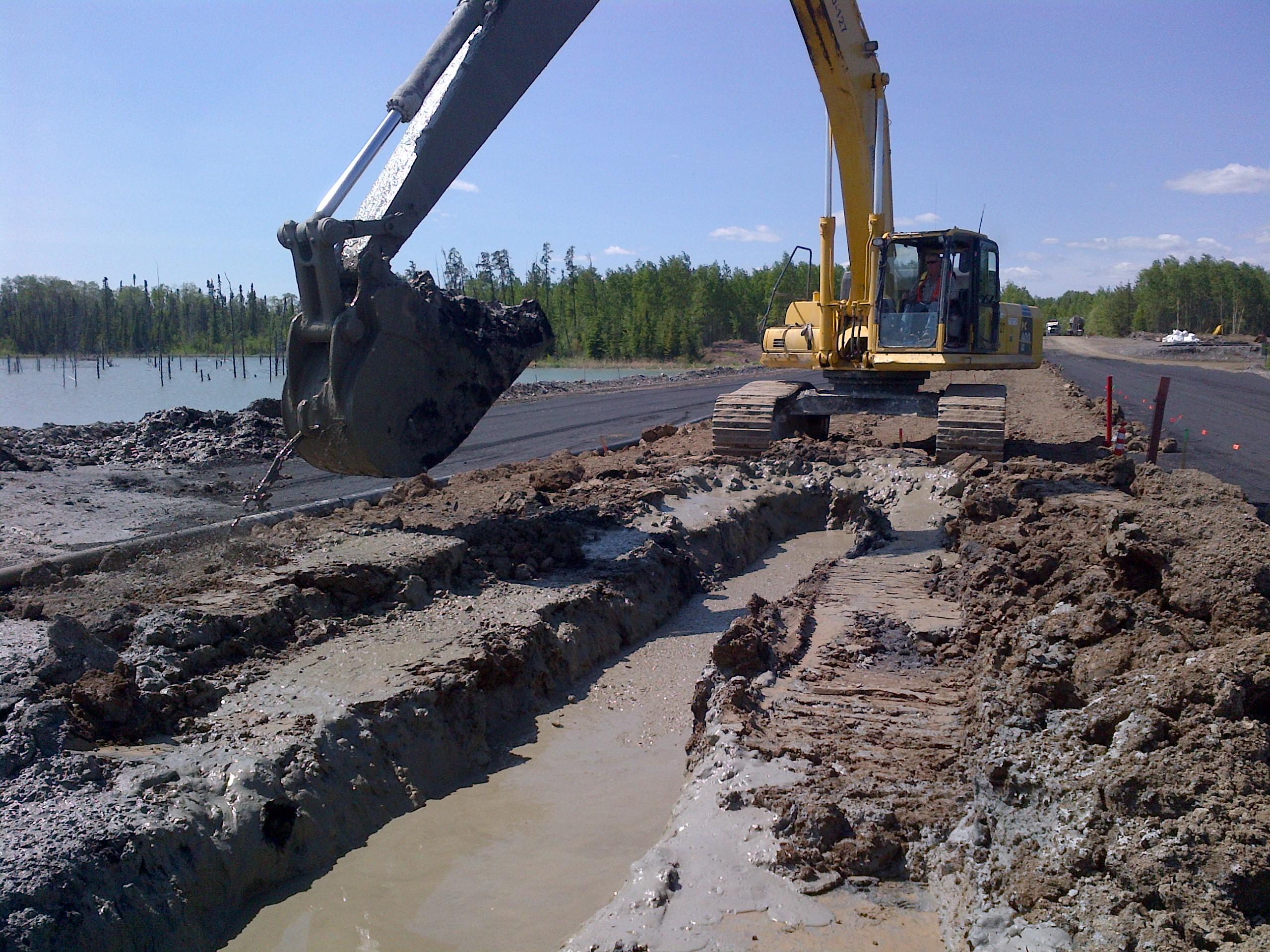
The construction of a Slurry Wall begins with the excavation of a continuous trench to the required depth using specialised equipment. The excavated soil is then blended with a bentonite- or cement-bentonite-based slurry to create an engineered backfill material with the hydraulic and mechanical properties required for the project.

The slurry mixture is placed back into the trench in successive stages, where it remains stable during installation before progressively curing to form a continuous low-permeability barrier. Throughout the process, key parameters—including trench geometry, material composition and placement quality—are carefully monitored to ensure the wall achieves the specified structural and hydraulic performance.

Proven solutions across
diverse sectors

From large-scale infrastructure to residential developments, our ground improvement technologies are engineered to adapt to every project environment and soil condition.

Buildings

Process & Energy

Ports & Airports

Rail & Road

Frequently Asked Questions

A Slurry Wall is an underground barrier constructed to control groundwater, provide excavation support or contain contaminants. It is formed by excavating a continuous trench and backfilling it with a low-permeability material, such as soil-bentonite or cement-bentonite, to create a durable cut-off wall.

Slurry Walls are commonly used where groundwater control, excavation stability or environmental containment is required. They are suitable for deep excavations, flood protection works, dams, landfills, industrial facilities and contaminated site remediation projects.

The low-permeability backfill material significantly reduces the movement of groundwater through the wall. This limits groundwater inflow into excavations and helps prevent the migration of contaminants, creating an effective underground hydraulic barrier.

The most common types are soil-bentonite and cement-bentonite Slurry Walls. The most appropriate solution depends on the project’s structural, hydraulic and environmental requirements, as well as the site’s geotechnical conditions.

Yes. Depending on the design and materials used, Slurry Walls can provide both groundwater control and structural support for temporary or permanent excavations, making them a versatile solution for complex underground works.

Slurry Walls combine groundwater control, environmental protection and excavation support in a single construction system. They provide a durable, economical and sustainable solution while minimising groundwater inflow and reducing the risk of contaminant migration.

Quality control includes continuous monitoring of trench excavation, backfill composition and placement procedures. Additional laboratory and field testing may be carried out to verify that the wall meets the specified hydraulic and structural performance requirements.

Unlike dewatering systems that require continuous pumping, Slurry Walls create a permanent or long-term underground barrier that controls groundwater passively. This can reduce operating costs, improve environmental protection and provide long-term performance with minimal maintenance.

Contact us

Whether you’re planning a new project or looking for technical advice, our team is ready to assist. Contact us to learn more about our expertise and solutions.