Rapid Impact Compaction

Discover a comprehensive range of soil consolidation and reinforcement techniques designed to secure your infrastructure and optimize your project’s timeline.

About
Rapid Impact Compaction

Rapid Impact Compaction is a ground improvement technique that densifies shallow loose granular soils and fills by applying a series of rapid, high-frequency impacts to the ground surface. The process increases soil density, improves bearing capacity and reduces settlement, providing a cost-effective foundation solution for buildings, roads, railways and other infrastructure projects.

With extensive expertise in impact ground improvement, Menard designs each Rapid Impact Compaction solution according to the site’s geotechnical conditions, structural requirements and performance objectives. Every installation is carried out under rigorous quality control procedures to ensure consistent treatment quality, reliable ground improvement and compliance with project specifications.

Enhancing shallow ground through rapid impact energy

Rapid Impact Compaction is a ground improvement technique that densifies shallow loose granular soils and fills by applying a series of rapid, high-frequency impacts to the ground surface. The process increases soil density, improves bearing capacity and reduces settlement, providing a reliable foundation solution for buildings, roads, railways and infrastructure projects.

Unlike conventional Dynamic Compaction, Rapid Impact Compaction uses lower-energy, high-frequency impacts to improve shallow ground with reduced vibration and minimal disruption. This approach makes it particularly effective for working near existing structures or in constrained urban environments, providing an efficient, economical and sustainable solution for a wide range of ground improvement projects.
  • Zero spoils created

  • Minimizes settlement
  • Economically efficient
  • Environmentally sound: avoid disturbing contaminants
  • Loose soils

  • Sandy soils
  • Fill soils
  • Treat soils up to 6m deep

  • Bearing pressure of up to 300 kPa SLS

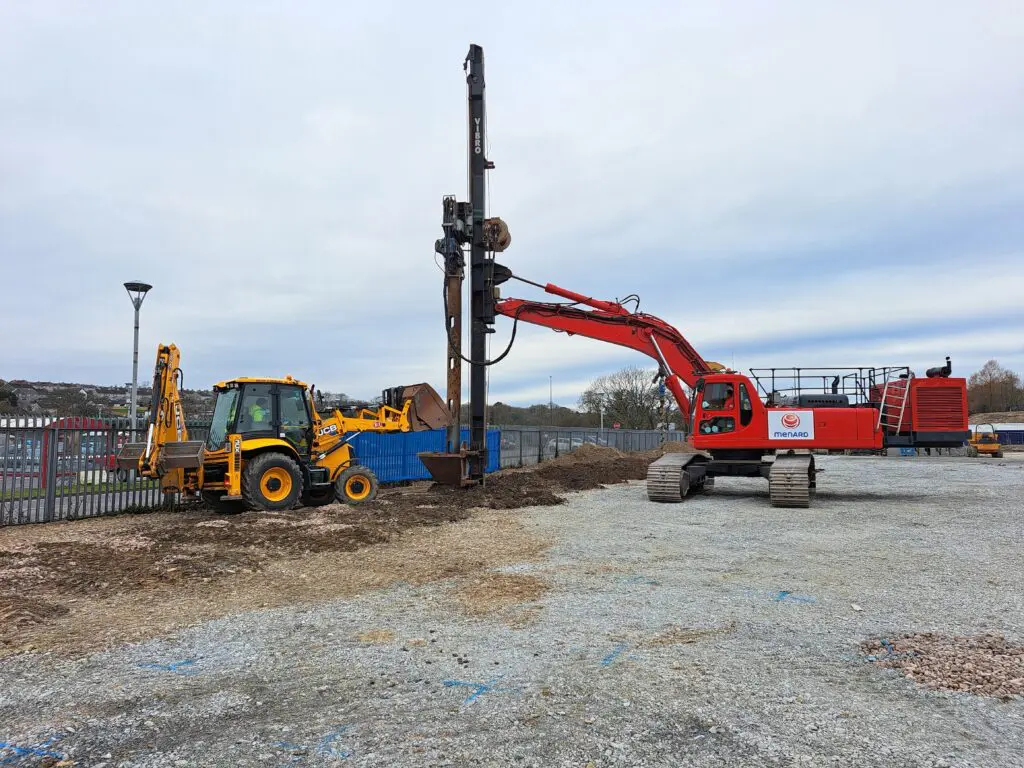
Rapid Impact Compaction is carried out using an excavator-mounted hydraulic hammer that repeatedly strikes a steel impact foot resting on the ground surface. The rapid succession of impacts transfers energy into the underlying soil, increasing its density and improving the bearing capacity of shallow ground.

The treatment is performed according to a predefined grid and continues until the required level of compaction is achieved. Throughout the installation process, key parameters such as impact energy, number of blows, penetration and ground response are continuously monitored to ensure consistent treatment quality and compliance with the project’s performance requirements.

Proven solutions across
diverse sectors

From large-scale infrastructure to residential developments, our ground improvement technologies are engineered to adapt to every project environment and soil condition.

Buildings

Process & Energy

Ports & Airports

Rail & Road

Frequently Asked Questions

Rapid Impact Compaction (RIC) is a ground improvement technique that densifies shallow loose granular soils and fills by applying a series of rapid, high-frequency impacts to the ground surface. The process increases soil density, improves bearing capacity and reduces settlement.

Rapid Impact Compaction is commonly used to improve shallow ground conditions for buildings, roads, railways, working platforms and other infrastructure projects. It is particularly suitable where fast, cost-effective treatment is required with limited site disruption.

Rapid Impact Compaction is most effective in loose granular soils, engineered fills and uncontrolled fills. A geotechnical investigation is carried out to determine whether the technique is appropriate for the site’s ground conditions.

The technique uses an excavator-mounted hydraulic hammer to repeatedly strike a steel impact foot resting on the ground surface. The resulting impact energy densifies the underlying soil, improving its engineering properties and creating a more stable foundation platform.

Rapid Impact Compaction offers a fast and economical solution for improving shallow ground conditions. It increases bearing capacity, reduces settlement and can often be performed with lower vibration and less disruption than conventional Dynamic Compaction.

Yes. Because it applies lower-energy, high-frequency impacts, Rapid Impact Compaction generally generates lower vibration levels than conventional Dynamic Compaction, making it suitable for many projects in constrained or developed environments.

Quality control includes continuous monitoring of installation parameters such as impact energy, penetration, number of blows and ground response. Field testing is also performed to verify that the required ground improvement objectives have been achieved.

Rapid Impact Compaction is designed for shallow ground improvement and can often be carried out more quickly with reduced vibration. It is particularly well suited to projects where site constraints, nearby structures or treatment depth make conventional Dynamic Compaction less appropriate.

Contact us

Whether you’re planning a new project or looking for technical advice, our team is ready to assist. Contact us to learn more about our expertise and solutions.