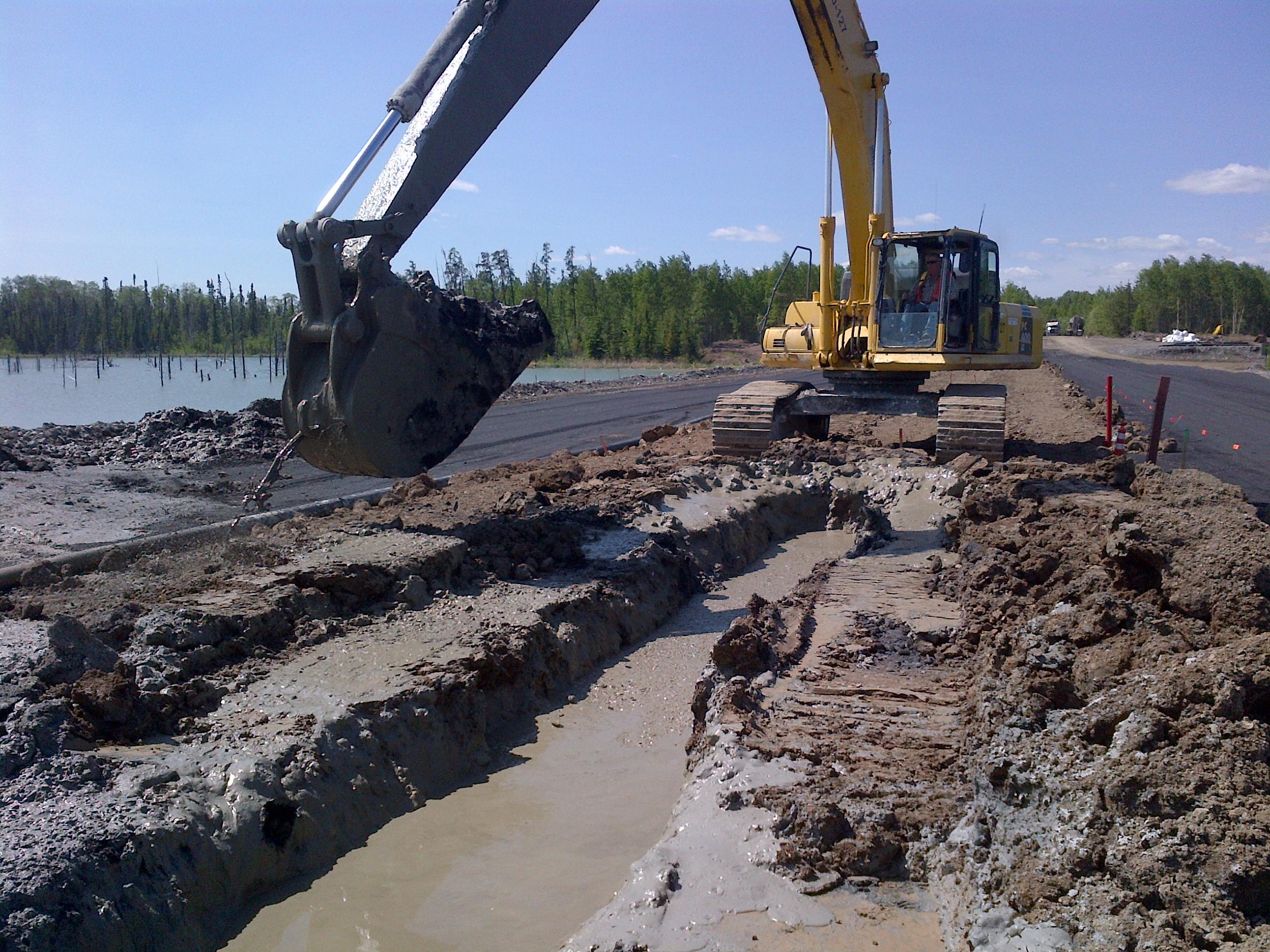
Soil Mixing

Discover a comprehensive range of soil consolidation and reinforcement techniques designed to secure your infrastructure and optimize your project’s timeline.

About
Soil Mixing

Soil Mixing is an advanced ground improvement technique that enhances the engineering properties of weak or unsuitable soils by mechanically blending them with a cementitious binder. The process creates engineered soil-cement columns or panels with improved strength, reduced compressibility and lower permeability, making it suitable for a wide range of buildings, infrastructure and environmental projects.

With extensive expertise in ground improvement, Menard designs each Soil Mixing solution according to the site’s geotechnical conditions, structural requirements and performance objectives. Every installation is carried out under rigorous quality control procedures to ensure consistent treatment quality, long-term durability and compliance with project specifications.

Transforming weak soils into engineered ground

Soil Mixing is an in-situ ground improvement technique that enhances weak or unsuitable soils by mechanically blending them with a cementitious binder. The process creates engineered soil-cement elements with increased strength, reduced compressibility and lower permeability, providing a reliable foundation solution for buildings, infrastructure and environmental projects.

Unlike techniques based on discrete inclusions, Soil Mixing improves the soil mass itself by creating a homogeneous composite material. This approach provides excellent control of strength, settlement and groundwater flow while minimising excavation and spoil disposal, making it an efficient, economical and sustainable solution for a wide range of ground conditions.
  • Vibration-free and non-disruptive

  • Environmentally unobtrusive
  • Suitable for seismic areas
  • Increases bearing capacity and shear resistance
  • Soft soils

  • Non-cohesive soils
  • High-Moisture soils
  • Treat soils up to 30m deep

  • Bearing pressure of up to 400 kPa SLS
  • Single or Multiple Augers Utilized

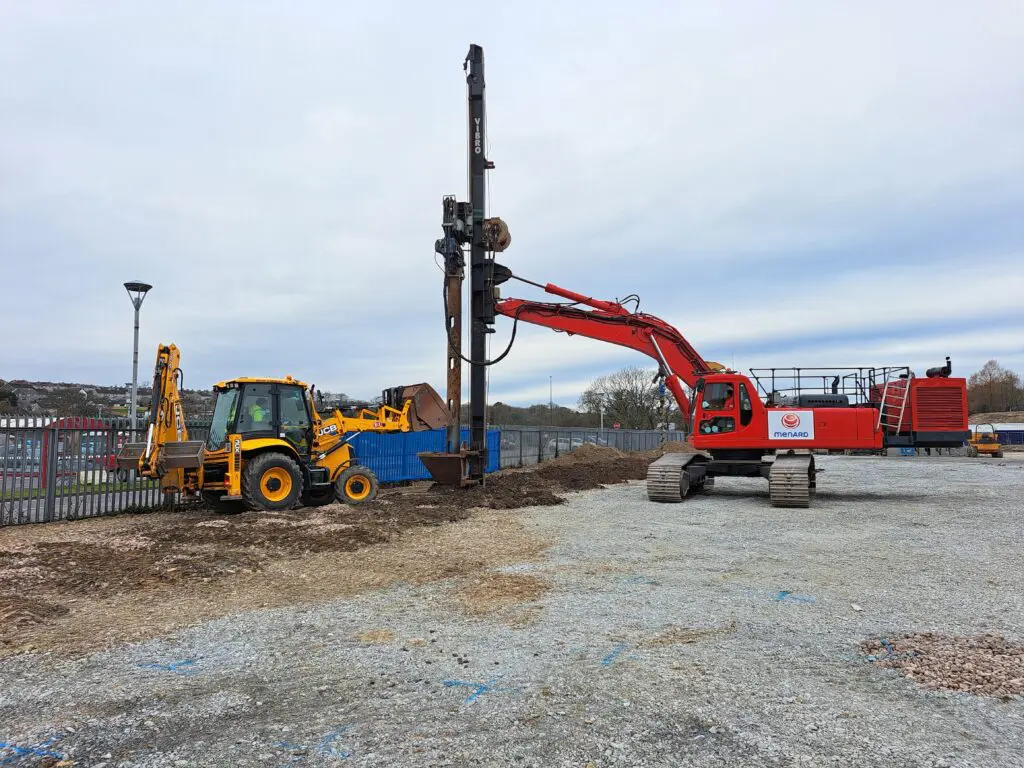
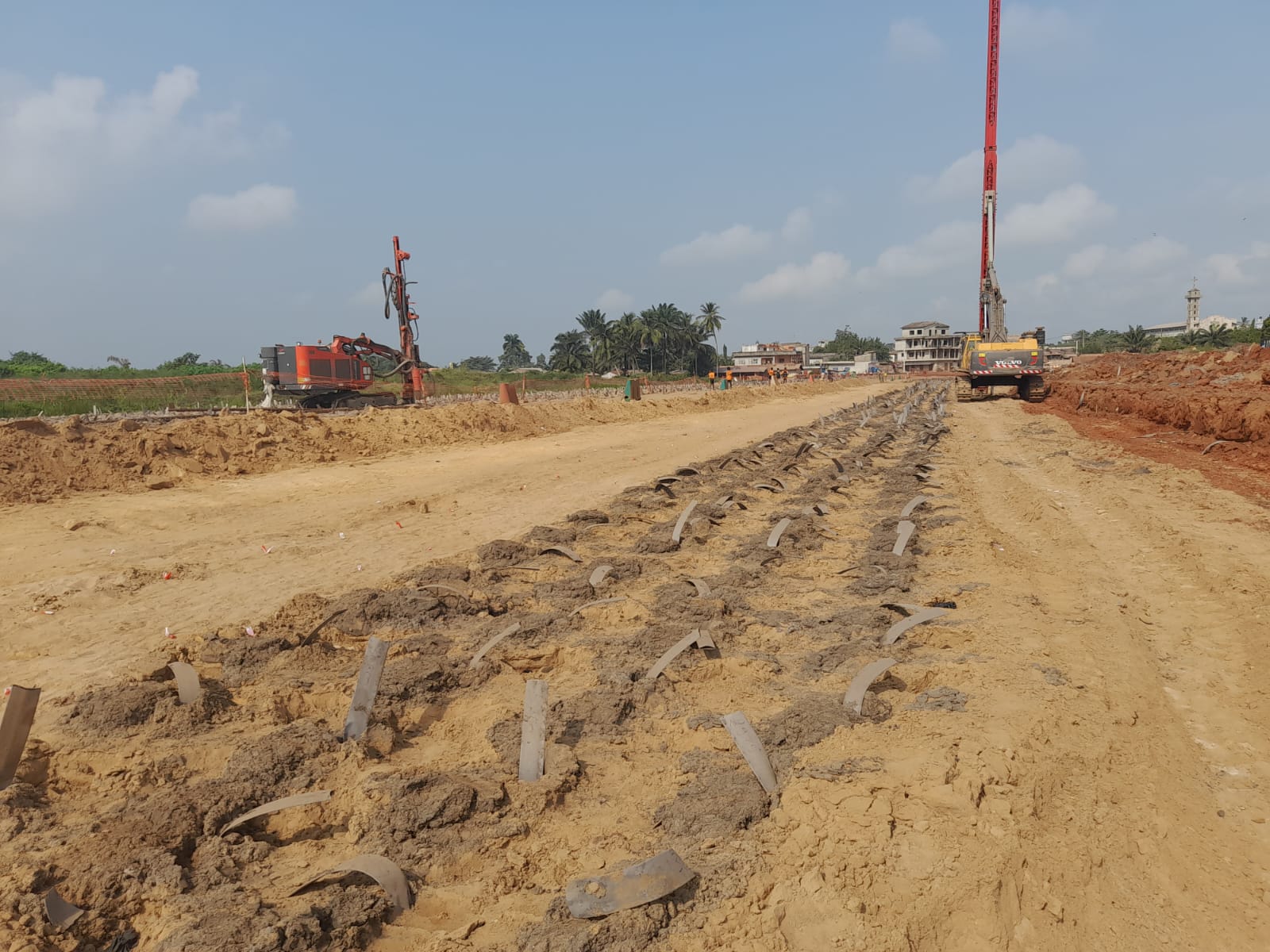
Soil Mixing is performed using specialised augers or mixing paddles that mechanically blend the in-situ soil with a carefully selected cementitious binder. Depending on the project requirements, the treated soil can be formed as individual columns or arranged into continuous rows, panels, grids or mass treatment areas.

During installation, the mixing tools penetrate the ground while the binder is injected through the drilling system and thoroughly mixed with the surrounding soil. The equipment repeatedly advances and retracts to ensure a uniform distribution of the binder and the formation of a homogeneous soil-cement structure. Throughout the process, key installation parameters—including binder dosage, mixing energy and depth—are continuously monitored and adjusted to achieve the specified engineering properties and ensure consistent treatment quality.

Proven solutions across
diverse sectors

From large-scale infrastructure to residential developments, our ground improvement technologies are engineered to adapt to every project environment and soil condition.

Buildings

Process & Energy

Ports & Airports

Rail & Road

Frequently Asked Questions

Soil Mixing is an in-situ ground improvement technique that enhances weak or unsuitable soils by mechanically blending them with a cementitious binder. The process creates engineered soil-cement columns, panels or mass-treated zones with improved strength, reduced compressibility and lower permeability.

Soil Mixing is commonly used where weak soils require increased strength, reduced settlement or improved groundwater control. It is suitable for a wide range of applications, including buildings, embankments, excavation support, environmental containment and infrastructure projects.

Soil Mixing is effective in many soft or loose soils, including clays, silts, peat and certain granular soils. The suitability of the technique depends on the site’s geotechnical conditions, which are evaluated during the design phase.

The technique mechanically blends the in-situ soil with a cementitious binder to create a homogeneous soil-cement material. This significantly increases the soil’s strength and stiffness while reducing compressibility and, where required, permeability.

Soil Mixing improves the engineering properties of existing soils without the need for large-scale excavation or soil replacement. It offers an efficient, economical and sustainable ground improvement solution while reducing material transport and construction waste.

Yes. Depending on the binder formulation and project requirements, Soil Mixing can significantly reduce the permeability of the treated ground. This makes it suitable for applications such as cut-off walls, excavation support and environmental containment systems.

Quality control includes continuous monitoring of key installation parameters such as mixing depth, binder dosage and mixing energy. Field and laboratory testing may also be carried out to verify that the treated soil meets the specified engineering performance.

Unlike conventional excavation and replacement, Soil Mixing improves the soil in place. This minimises excavation, reduces spoil disposal and construction traffic, and can provide significant environmental and economic benefits while achieving the required ground performance.

Contact us

Whether you’re planning a new project or looking for technical advice, our team is ready to assist. Contact us to learn more about our expertise and solutions.